
Design Debt Audit – Why Necessary For Websites ?
A Design Debt Audit is a specialized evaluation used to identify the “interest” your business is paying on past shortcuts, outdated styles, and inconsistent user experiences.
Just as Technical Debt refers to messy code that makes a site slow or hard to update, Design Debt is the accumulation of small, seemingly minor design inconsistencies that eventually slow down your team and frustrate your customers.
An audit typically looks at three specific areas
The 3 Pillars of Design Debt
1. Visual Debt
Inconsistent fonts, mismatched button styles, or "off-brand" colors that make the site look unprofessional.
2. UX Debt
Confusing navigation, broken user flows, or forms that were "quick fixes" but now cause high drop-off rates.
3. Operational Debt
How hard it is for your team to make updates. If a simple change takes hours because there is no "Design System," you have high operational debt.
Sample: What a Design Debt Audit Looks Like
If we were to perform this audit for you, the final report would look like a Prioritized Action Plan. Here is a sample of how we categorize and report findings:
1. Executive Summary
a) Total Debt Score: 72/100 (High Debt) b) Primary Culprit: Fragmented UI components and lack of mobile optimization in the checkout flow. c) Estimated Revenue Leak: Approx. 12% loss in conversions due to "UX Friction" on mobile.
2. The "Debt Ledger" (The Issues)
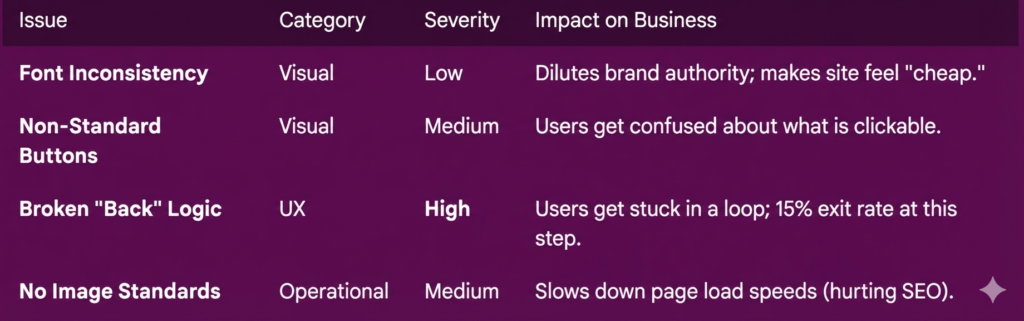
3. The Roadmap (The Payoff Plan)
We don't just list problems; we tell you what to fix first to get the most "profit" back.
a) Quick Wins (Next 14 Days): Standardise all Call-to-Action (CTA) buttons and fix the mobile navigation bug.
b) Strategic Fixes (30-60 Days): Consolidate 12 different font styles into 2 brand-approved families.
c) Structural Payoff (90 Days): Build a "Mini Design System" so future pages can be built 50% faster.<br)
Why bother with an audit?
Most businesses don't realize they are "bankrupt" in design until they try to launch a new feature and realize it will take 4 weeks instead of 4 days because the foundation is so messy. The audit stops the bleeding. It identifies exactly where your website is working against your sales team.